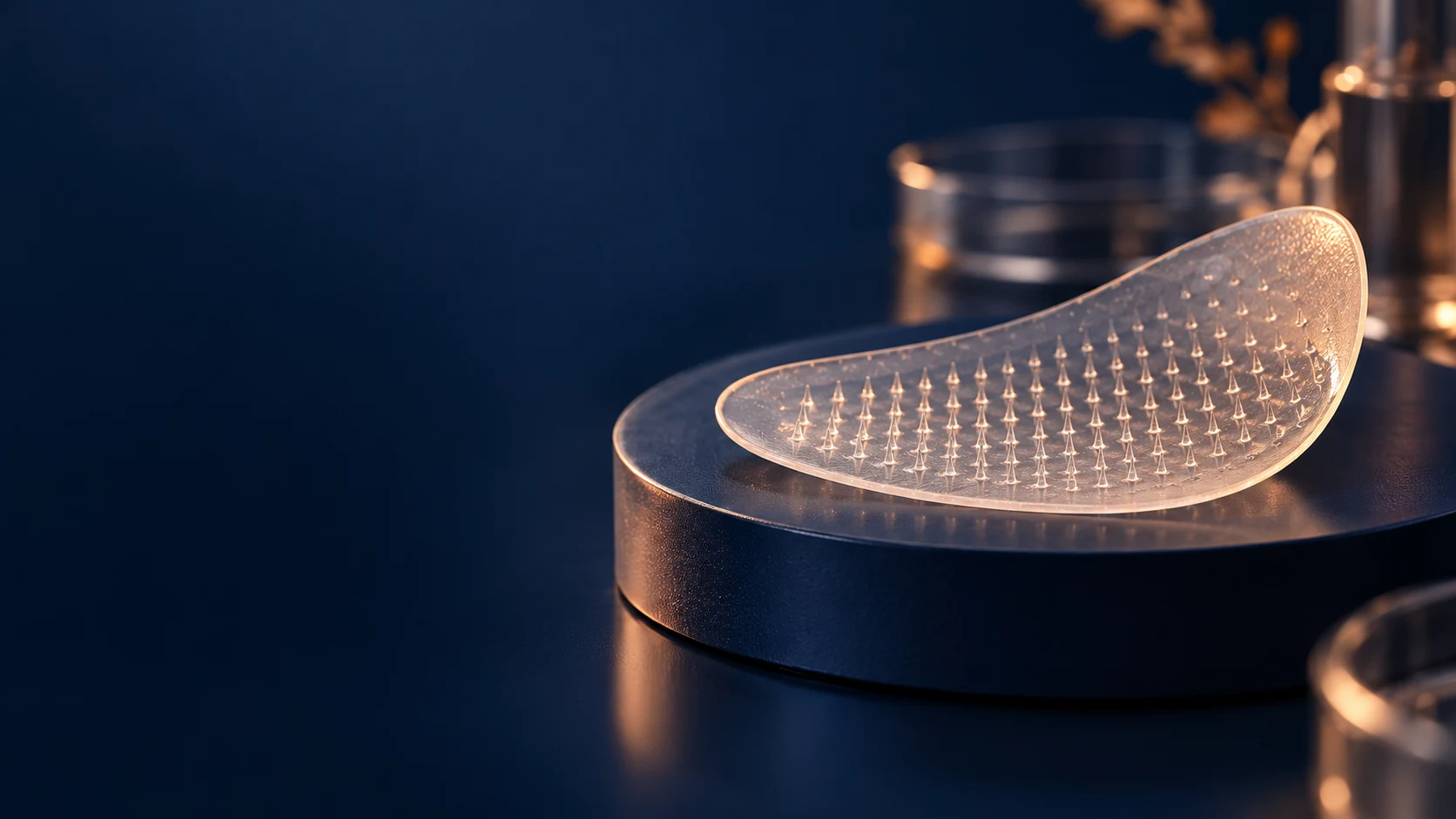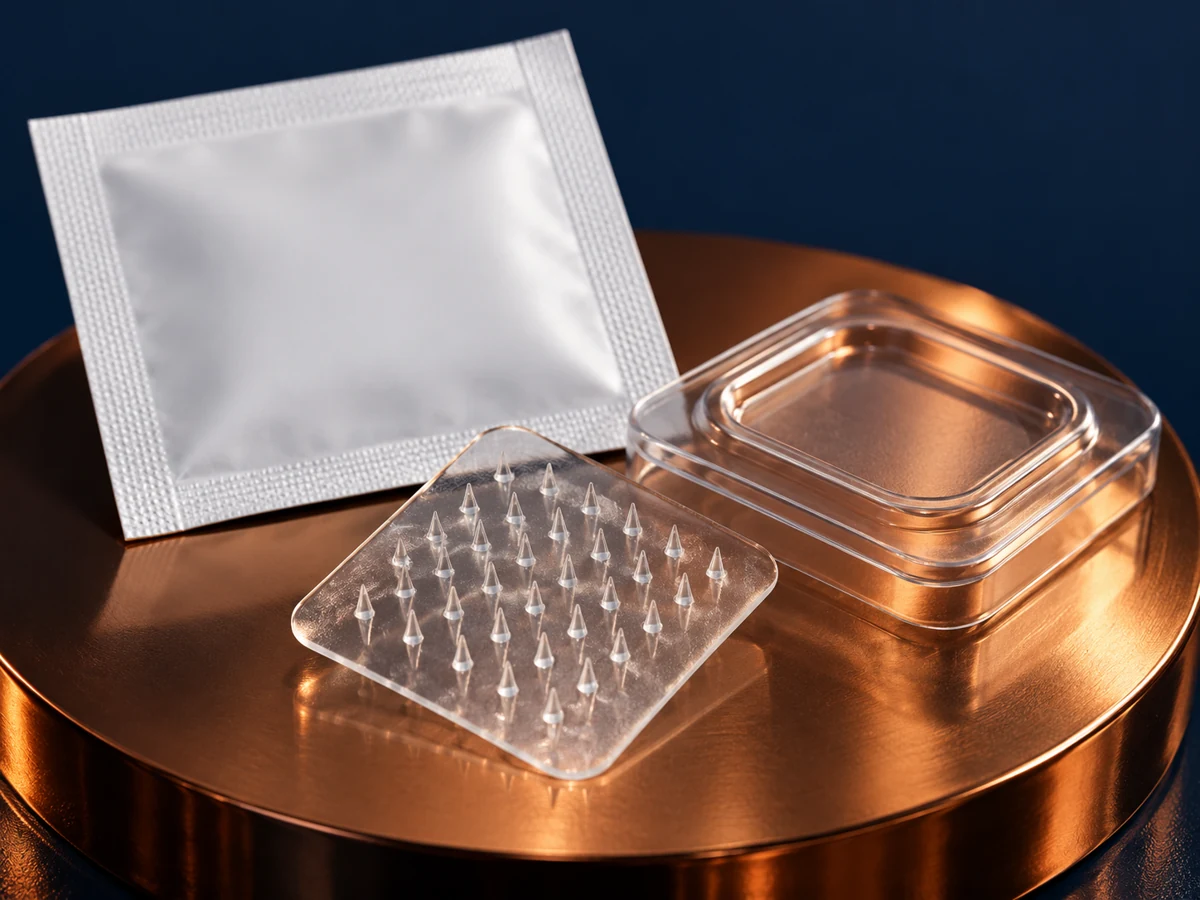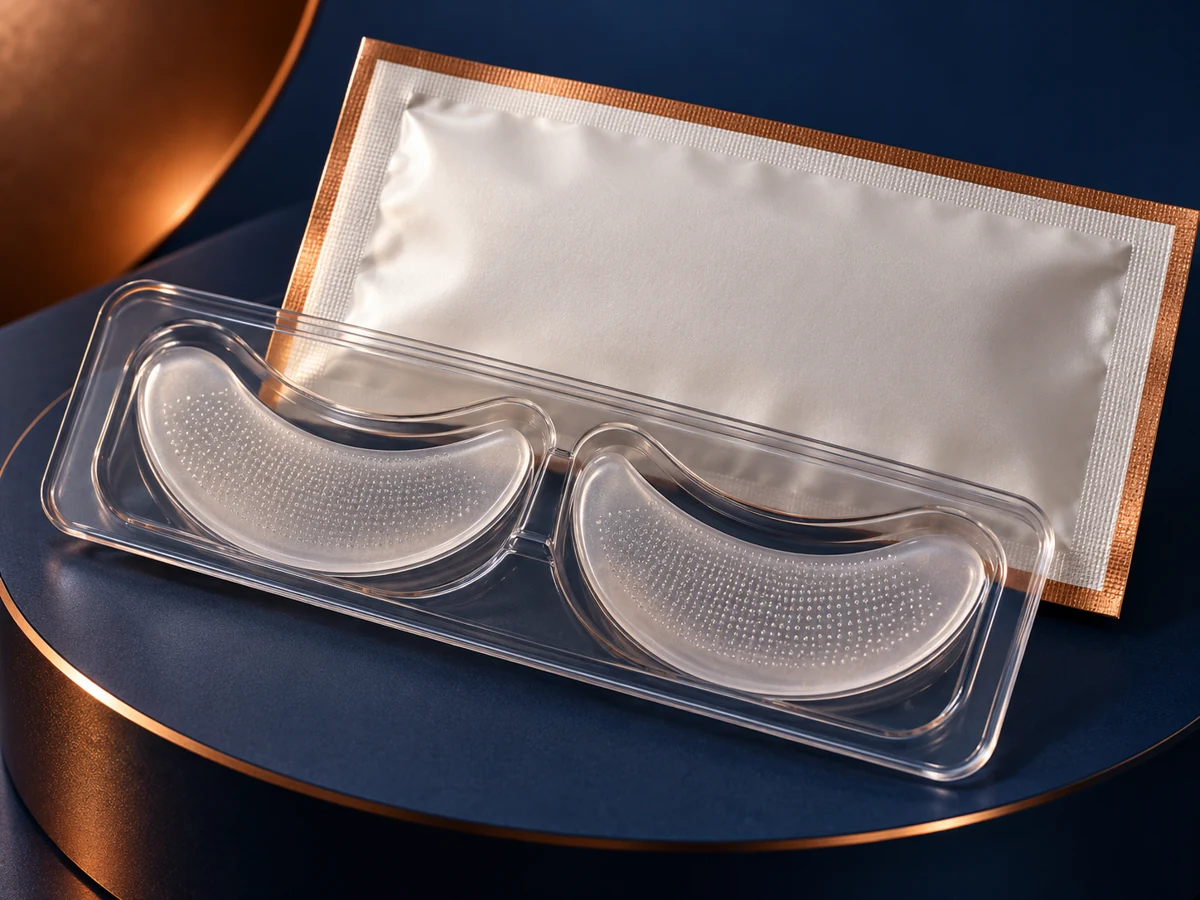
Different cosmetic peptides introduce different formulation and documentation questions for a soluble microarray.
Specify the peptide direction
An acetyl hexapeptide microneedle patch and a palmitoyl peptide concept are not interchangeable formulations. Define the INCI ingredient and supplier information. Peptide identity, matrix behavior and the intended application shape the evaluation brief.
Handle trademark-associated terms carefully
Argireline microneedle patch and Matrixyl microneedle patch are buyer search themes involving ingredient-associated names. A supplier should verify the actual sourced ingredient and rights to use trademarked names. A familiar brand term is not proof of a finished-patch claim.
Avoid treatment comparisons
A wrinkle-care ingredient concept should not be framed as equivalent to an injectable treatment. Cosmetic appearance language needs evidence appropriate to the finished formula and application. There is no guaranteed outcome derived from the ingredient name.
Agree the test and packaging scope
Compatibility, stability and protective packaging questions should be written into the project scope. Ask which sample version is evaluated and what documentation will be provided. Changes to a formula or matrix may require the plan to be revisited.
Prepare your next project conversation
A useful starting brief identifies the application, target market, ingredient direction, expected quantity and current development stage. Ask which assumptions have been tested, which documents are available and which decisions remain open. Commercial commitments should follow an agreed technical scope.
Explore custom microneedle solutions and R&D and manufacturing planning. For a specific requirement, send a non-confidential project brief.
Common project questions
What should a brand clarify before starting this project?
Define the application, target market, ingredient direction, quantity and project stage. Ask which evidence is available and which questions the proposed work will answer.
Does this guide establish a finished-product claim?
No. The guide explains development considerations. Safety, performance, use instructions and classification require review for the actual finished design.
Development guidance is general. Feasibility, testing, intended use and target-market classification are assessed for each project. Images illustrate development concepts.