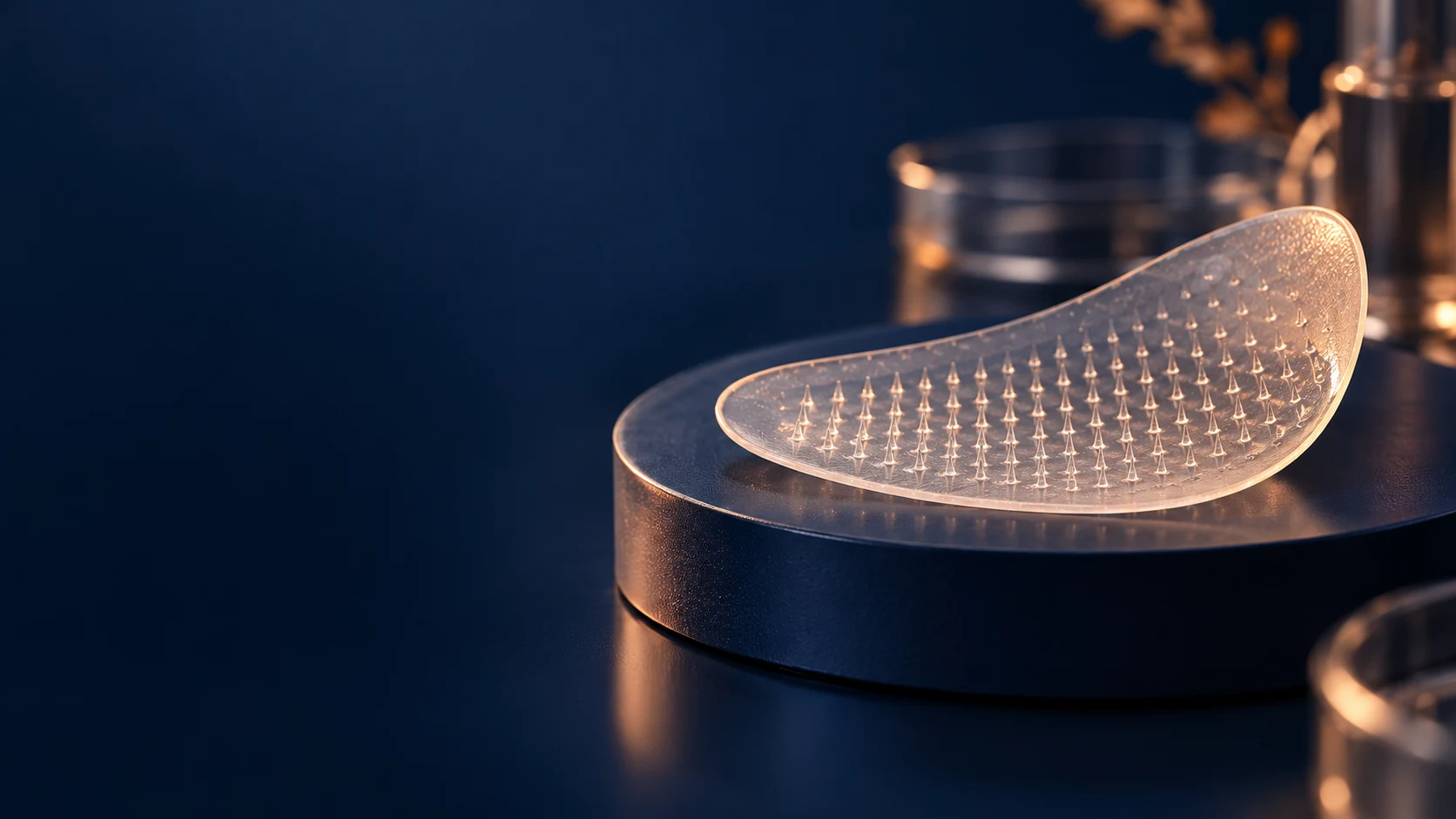
A hyaluronic acid matrix is a development candidate, rather than a complete finished-patch specification.
Material identity comes first
Ask for the specified material identity, grade and sourcing information. Molecular characteristics and the rest of the formula can affect how a matrix behaves. A material name alone does not establish molding consistency, dissolution behavior or suitability for the proposed use.
Hydration claims need finished-product evidence
A hydrating microneedle patch claim should be supported for the actual product. Ingredient reputation is useful background but cannot substitute for evidence about the final formula and its intended application. Avoid implying an injection-like result from a cosmetic ingredient.
Consider the full storage system
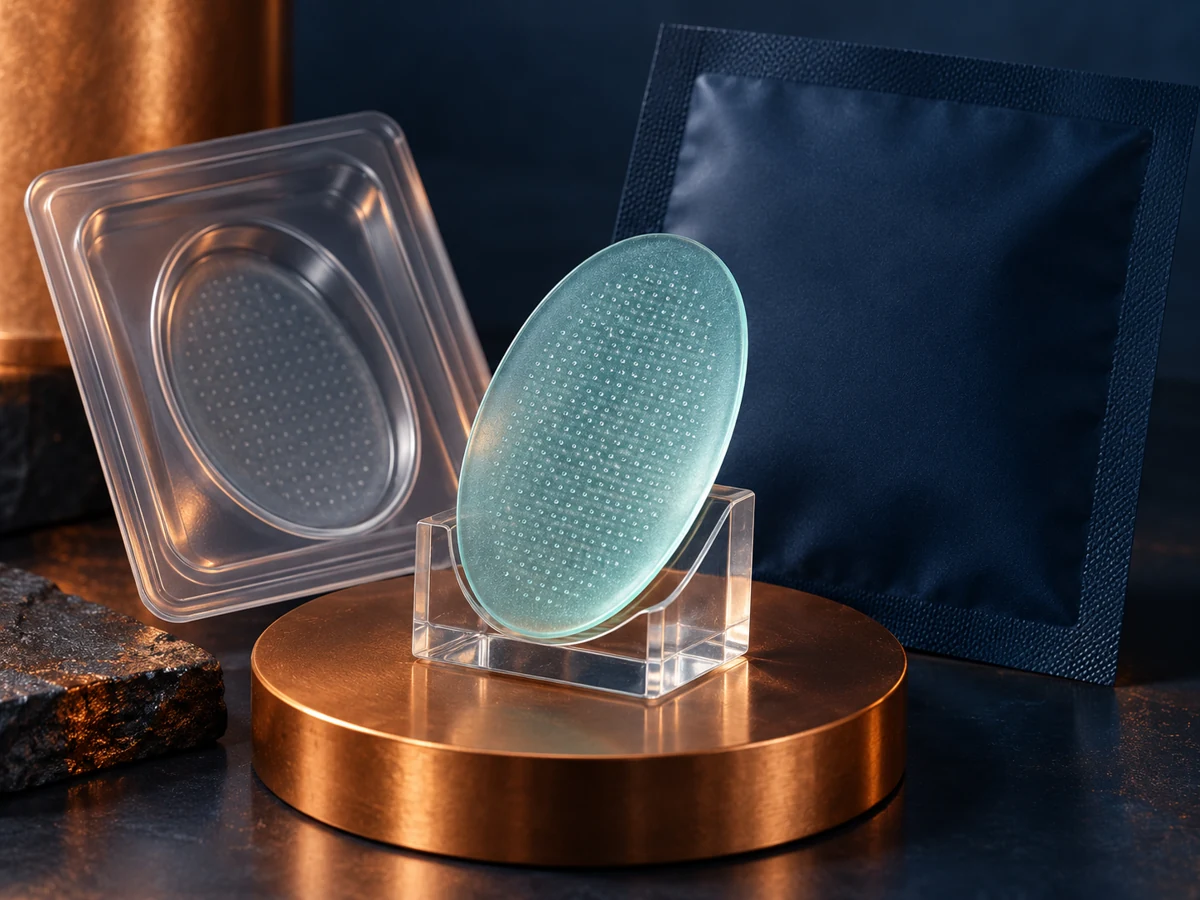
The array, backing, tray and sachet should be assessed together. A hyaluronic acid microdart patch may be sensitive to moisture exposure, but the appropriate storage statement depends on the specified formula and package. Stability observations must correspond to that version.
Define the comparison
When comparing a hyaluronic acid matrix microneedle patch with another soluble polymer option, use agreed observations and acknowledge method limitations. The goal is to answer the relevant project question rather than assert that one matrix is universally superior.
Prepare your next project conversation
A useful starting brief identifies the application, target market, ingredient direction, expected quantity and current development stage. Ask which assumptions have been tested, which documents are available and which decisions remain open. Commercial commitments should follow an agreed technical scope.
Explore custom microneedle solutions and R&D and manufacturing planning. For a specific requirement, send a non-confidential project brief.
Common project questions
What should a brand clarify before starting this project?
Define the application, target market, ingredient direction, quantity and project stage. Ask which evidence is available and which questions the proposed work will answer.
Does this guide establish a finished-product claim?
No. The guide explains development considerations. Safety, performance, use instructions and classification require review for the actual finished design.
Development guidance is general. Feasibility, testing, intended use and target-market classification are assessed for each project. Images illustrate development concepts.