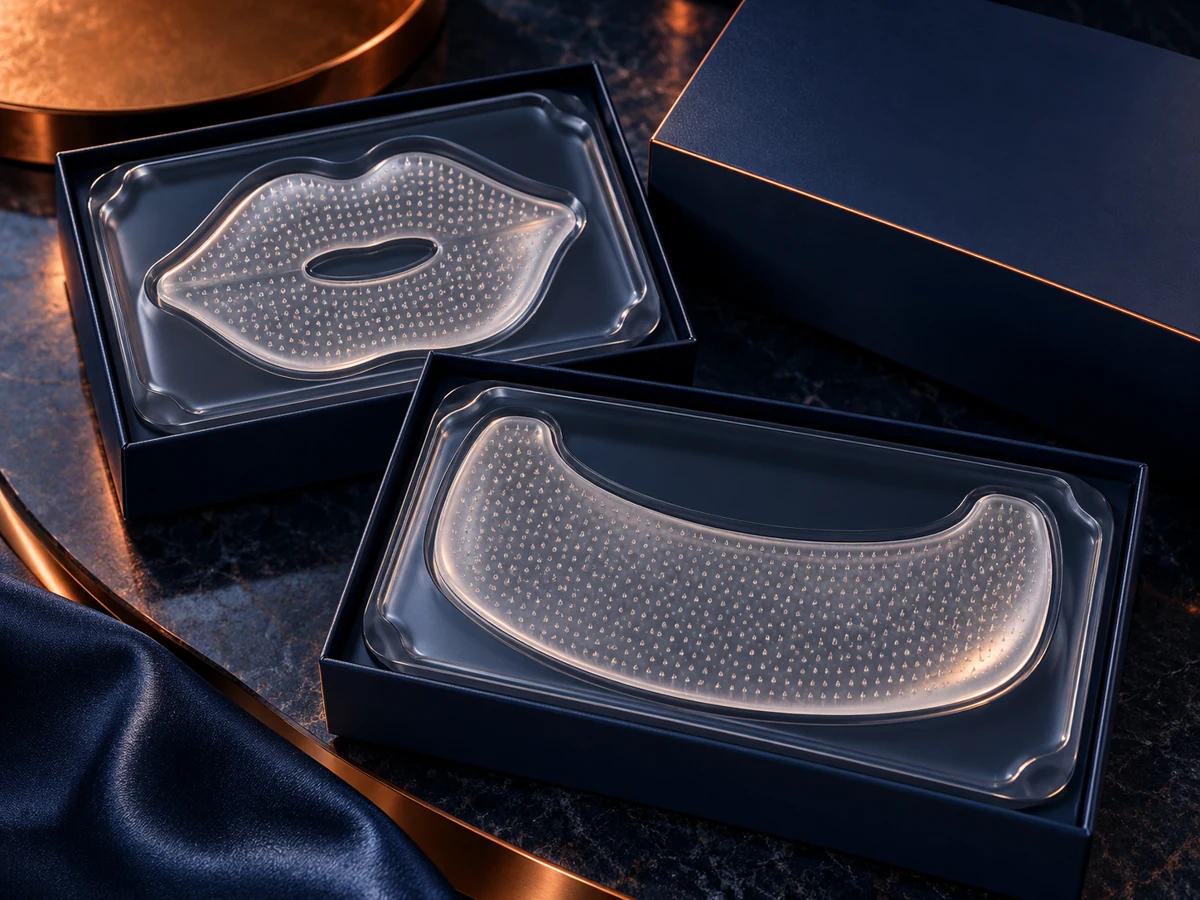
Patch contour should follow the application and handling needs while staying connected to array design and protective packaging.
Format names are starting points
Circular microneedle patch, square microneedle patch and oval microneedle patch describe an outer shape. They do not specify contact area, array position, adhesive border or backing. A useful design brief covers those elements as part of the product architecture.
Application drives the contour
A custom contour microneedle patch should reflect the proposed placement and user context. Eye-area, forehead, lip, neck and body projects have different questions about fit and instructions. The choice should not be based on an attractive silhouette alone.
Plan tooling and package together
A changed contour may affect molding, protective cavities, pack count and carton layout. Confirm the approved design and the quote’s revision scope. Tooling ownership and change control should be agreed before an exclusive brand format is promised.
Use prototypes to answer defined questions
A prototype can help evaluate appearance and handling. It does not establish clinical efficacy or market readiness. Record which version was reviewed and which questions remain before pilot work or a commercial order.
Prepare your next project conversation
A useful starting brief identifies the application, target market, ingredient direction, expected quantity and current development stage. Ask which assumptions have been tested, which documents are available and which decisions remain open. Commercial commitments should follow an agreed technical scope.
Explore custom microneedle solutions and R&D and manufacturing planning. For a specific requirement, send a non-confidential project brief.
Common project questions
What should a brand clarify before starting this project?
Define the application, target market, ingredient direction, quantity and project stage. Ask which evidence is available and which questions the proposed work will answer.
Does this guide establish a finished-product claim?
No. The guide explains development considerations. Safety, performance, use instructions and classification require review for the actual finished design.
Development guidance is general. Feasibility, testing, intended use and target-market classification are assessed for each project. Images illustrate development concepts.