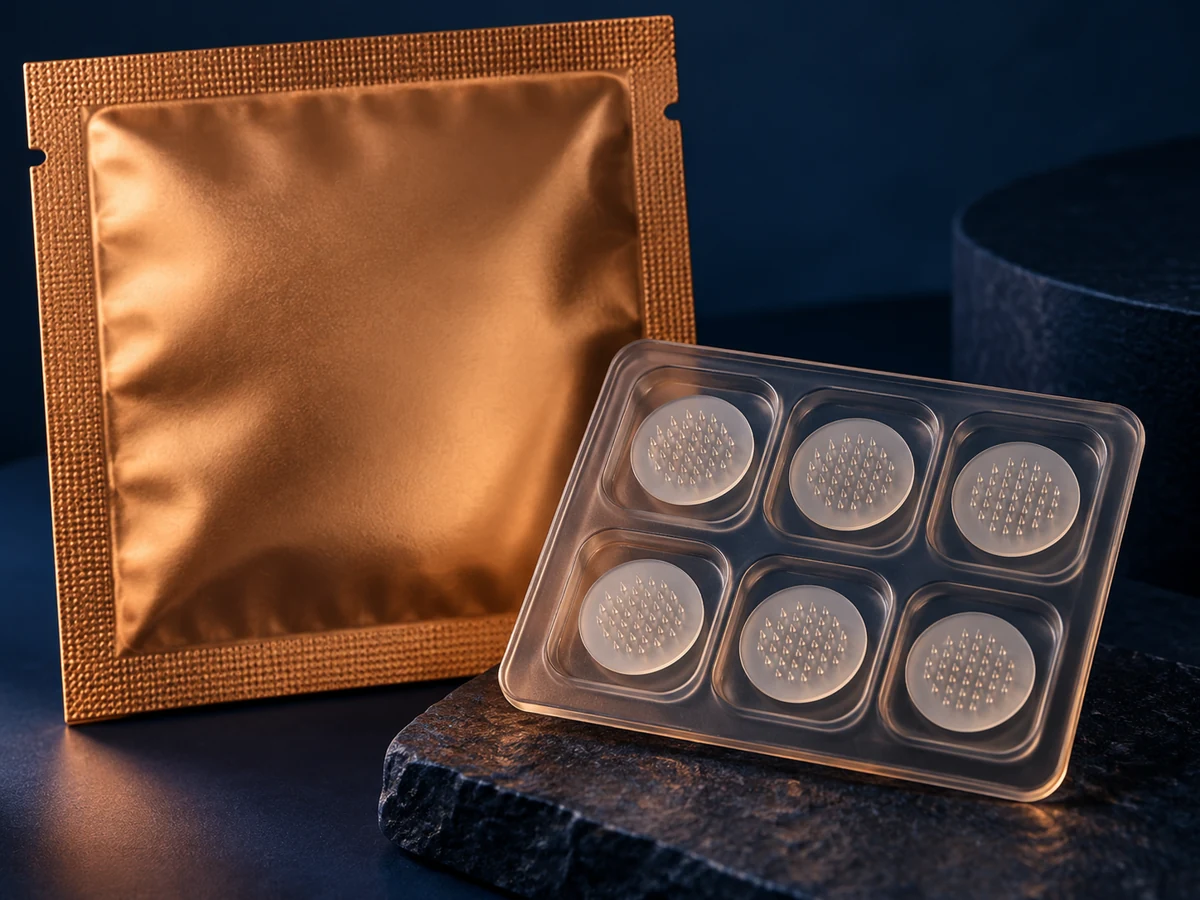
Different patch structures answer different development questions. A useful comparison does not assume one format is universally more effective.
Compare the actual products
Microneedle patch vs regular patch is too broad without identifying the flat patch material and the microarray design. Soluble projections, backing, ingredients and adhesive architecture all affect the scope. Neither structure guarantees a cosmetic result.
A spot format is not automatically a treatment
A blemish microneedle patch or microdart pimple patch concept should have clearly defined claims. Product language implying acne treatment can create a different regulatory question. Begin with the market and intended use rather than a treatment comparison.
Different structures need different checks
A microarray introduces projection integrity, handling and dissolution questions. A flat patch has its own material and performance considerations. Comparative claims should be supported by methods suitable for the actual products and intended use.
Use the comparison to choose a brief
A startup can compare format complexity, packaging and evidence requirements before deciding on development scope. The goal is a clearer product specification, not a general ranking based on visible design. Request prototype and commercial options separately.
Prepare your next project conversation
A useful starting brief identifies the application, target market, ingredient direction, expected quantity and current development stage. Ask which assumptions have been tested, which documents are available and which decisions remain open. Commercial commitments should follow an agreed technical scope.
Explore custom microneedle solutions and R&D and manufacturing planning. For a specific requirement, send a non-confidential project brief.
Common project questions
What should a brand clarify before starting this project?
Define the application, target market, ingredient direction, quantity and project stage. Ask which evidence is available and which questions the proposed work will answer.
Does this guide establish a finished-product claim?
No. The guide explains development considerations. Safety, performance, use instructions and classification require review for the actual finished design.
Development guidance is general. Feasibility, testing, intended use and target-market classification are assessed for each project. Images illustrate development concepts.